At DAKI Crafts we build the wooden sensory wall panels sold under the BumbleBeeSmart brand. Many of our orders come from autism centers, occupational therapy clinics, special education classrooms and families. This article explains how we help them plan a wall: which activities to combine, which colours to choose and how much space to allow.
Many autistic children experience light, sound and busy rooms differently. A quiet, predictable spot with hands-on activities gives a child something to do on their own terms. Below we share how we plan panels for autism-friendly spaces.
What Goes on the Wall
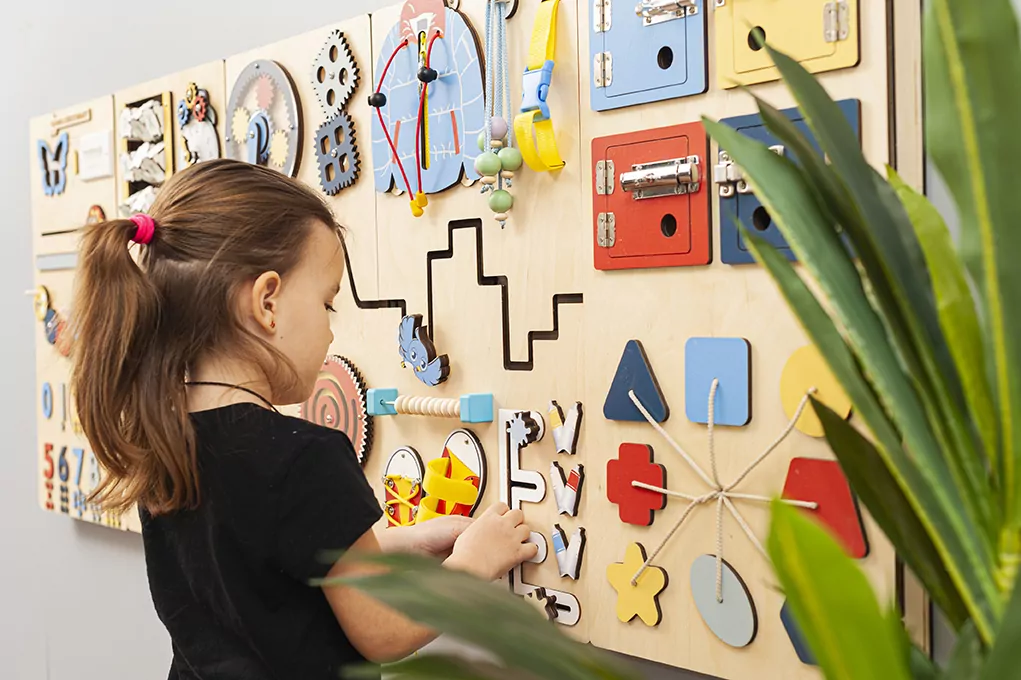
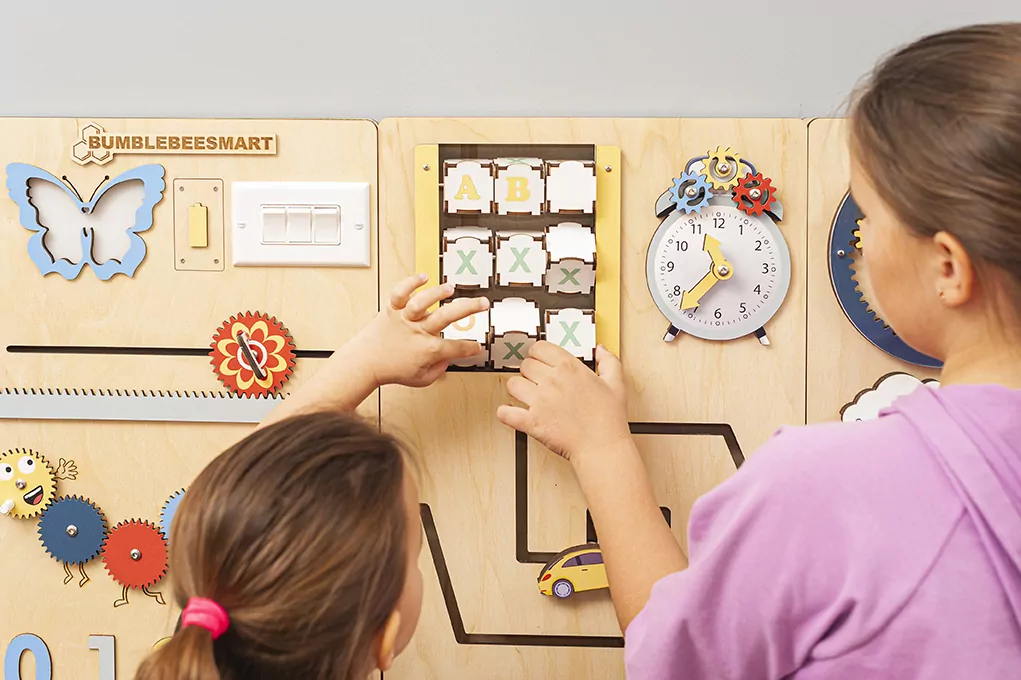
A sensory wall is a set of wall-mounted panels, each with its own activity. Because it hangs on the wall, it stays available all day and does not clutter the floor. Typical activities include:
- Spinning gears
- Sliding tracks and bead mazes
- Latches, locks and small doors
- Textured surfaces
- Colour matching
If you already know which activities suit your children, the DIY sensory wall kit lets you pick your own combination from 24 panel designs.
What Children Practise at the Wall
Each panel invites a simple action that a child can repeat at their own pace:
- Turning, sliding, pressing and opening with the fingers
- Using both hands together
- Following a moving bead or gear with the eyes
- Trying an action, seeing what happens and trying again
- Playing alone or side by side with another child
Every child is different. Parents, teachers and therapists decide how the wall fits into a child’s day.
Panels for Therapy Rooms
Occupational therapists often ask us for activities that work on grip, finger movements, using both hands and following a sequence. Wall-mounted panels need no setup or cleanup between sessions, which helps on a busy clinic schedule.
For a full therapy room wall, clinics often choose the 8-panel set for therapy rooms (280×65cm). For table work or a smaller corner, the 45×45cm peg maze boards come in several difficulty levels.
Where Our Panels Are Installed
- Waiting rooms and dental offices: the 5-panel wall for dental clinics and waiting rooms keeps children busy while they wait.
- Special education classrooms: the Spring Colours panel for schools is one of our most ordered designs.
- Autism centers and care settings: the rounded 5-panel set has soft, rounded edges.
- Homes and playrooms: the pastel panel fits a bedroom or a quiet corner.
- Libraries, children’s museums and play cafés: a panel or two near reading or waiting areas.
How to Choose Panels
- Colours. Many rooms for autistic children use soft or natural tones. The natural colour panel is a common choice for a calm look.
- Activity mix. Combine several kinds of activity so children can choose what they enjoy.
- Size. Measure the free wall length. Our sets run from 175cm to 350cm wide.
- Materials. Our panels are handmade from birch plywood with a non-toxic finish, and mounting hardware is included.
- Branding. Clinics and companies can order panels in their own brand colours.
Planning a Wall for Your Organization
Send us your wall measurements, the age range of the children and your preferred colours. We will suggest a layout and send a quote. Schools and clinics can also pay by purchase order. Request a quote for your center or classroom.
All our designs are sold through the BumbleBeeSmart store.