Quiet Time with a Busy Board: Setting Up a Calm Corner
Quiet time is not always as simple as turning down the lights and saying “let’s relax.” For some children, sitting still in a silent room feels uncomfortable. Many autistic children, and many other kids too, settle more easily when their hands have something to do. A busy board on the wall gives them that: a predictable, hands-on activity in a calm spot.
We make wooden busy boards and sensory wall panels in our workshop, and parents, teachers and therapists often ask us how to use one for quiet time. Here is what we tell them.
Why Quiet Time Helps
A day full of transitions, noise and social demands is tiring for any child. A short, regular quiet period gives a child a chance to:
- Take a break after a busy activity
- Do something on their own, at their own pace
- Move to the next part of the day more easily
What a Busy Board Is
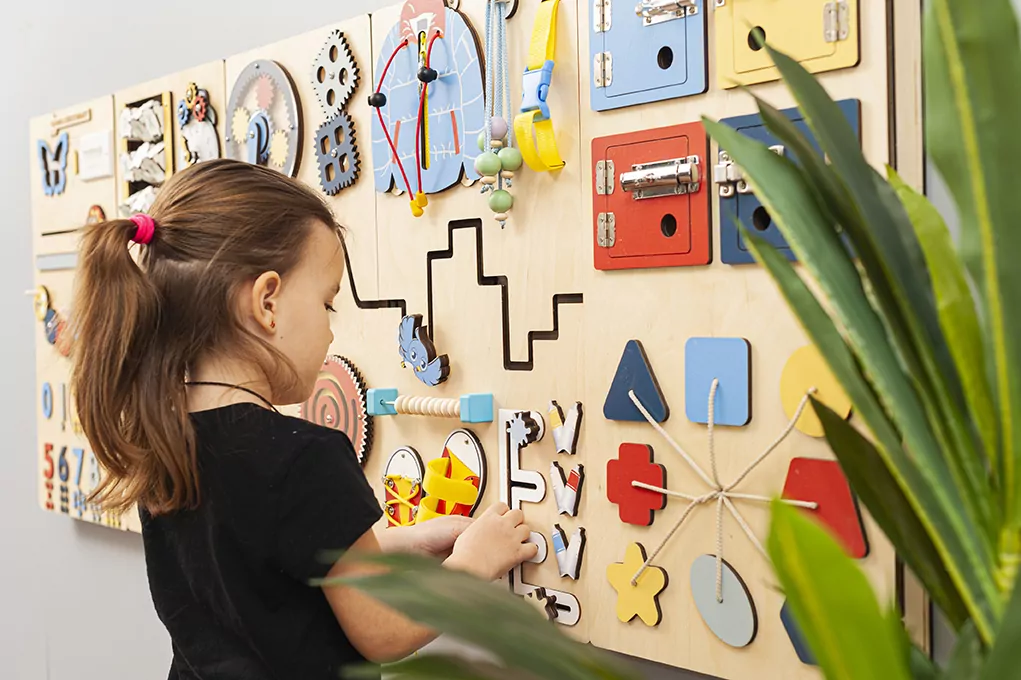
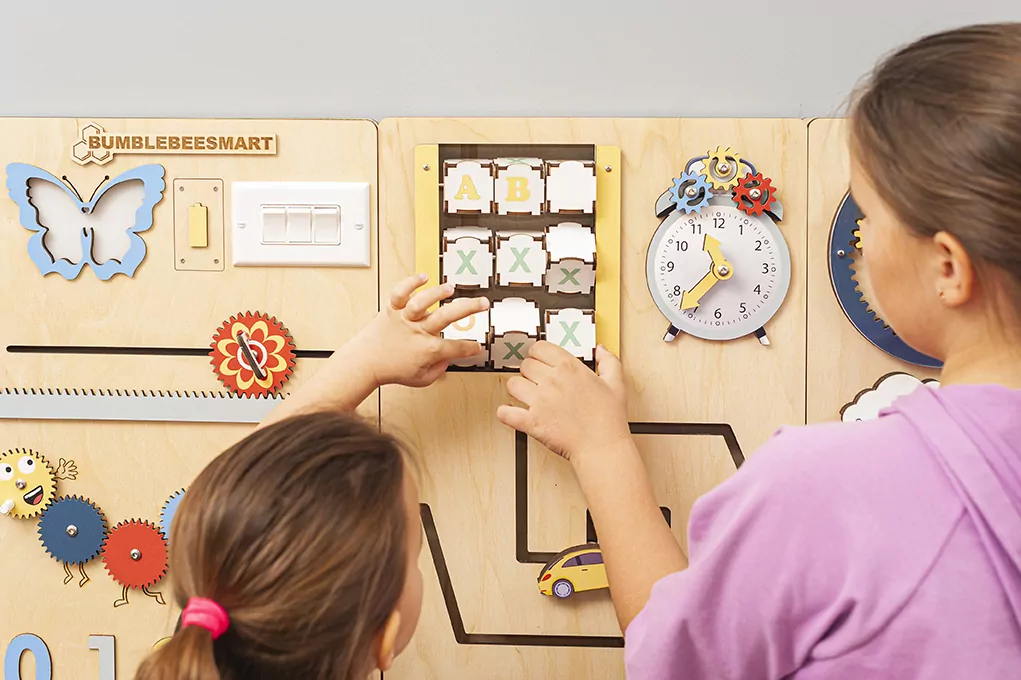
A busy board is a panel with everyday mechanisms children love to handle: latches, gears, sliders, switches and bead tracks, all fixed safely in place. A good board offers:
- Things to touch and move without loud sounds or flashing lights
- Finger and hand practice that feels like play
- Activities a child can use alone, with no adult setup
For a child who would rather “do” than sit, the board becomes a quiet activity instead of a screen or a noisy toy.
Where Busy Boards Fit In
- At home: before bedtime or after homework.
- In the classroom: in a quiet corner where a child can step away for a few minutes.
- In therapy centers: as a break activity between more demanding tasks.
Each action is small and repeatable: turn a gear, open a latch, slide a bead. Children can repeat the same one many times or move from one activity to the next. Both are fine.
How to Choose a Board for Quiet Time
- Safety: no sharp edges, no loose small parts, a non-toxic finish.
- Colours: bright neon can feel like too much. Pastel or natural tones suit a calm corner.
- Not too busy: a few clear activities work better than a crowded panel.
- Solid build: a board used every day needs sturdy wood and parts that stay in place.
For a calm corner, families most often choose our pastel sensory wall panel. Classrooms and therapy rooms that prefer a neutral look usually pick the panel in natural colours. Both are handmade from birch plywood under our BumbleBeeSmart brand.
How to Use a Busy Board During Quiet Time
- Start small: five minutes after an active game is enough at first.
- Make it a routine: the same time each day, for example before a story or after homework.
- Keep the space calm: softer light and fewer toys nearby.
- Let the child lead: there is no right way to play with the board.
- Rotate: if you have more than one panel, swap them from time to time.
Every child is different. Parents, teachers and therapists know best how quiet time fits into a child’s day.
For more ideas, read our guide to busy boards for toddlers and preschoolers.