Why a Quiet Corner Helps
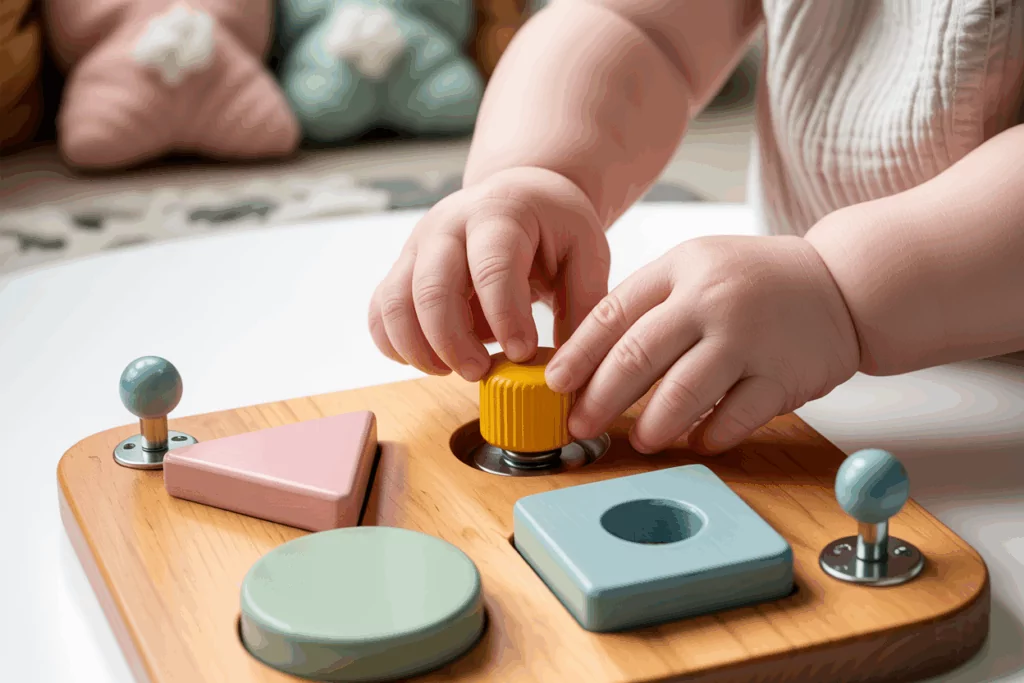
Young children are surrounded by sounds, lights, screens and constant activity. A sensory-friendly corner gives them a place to slow down and play quietly. It is a spot they can go to on their own when they need a break.
Such a corner does not have to be complicated or expensive. You may already own most of what you need. What matters is that the space feels comfortable and that your child knows it is always there.
Choosing the Right Spot at Home
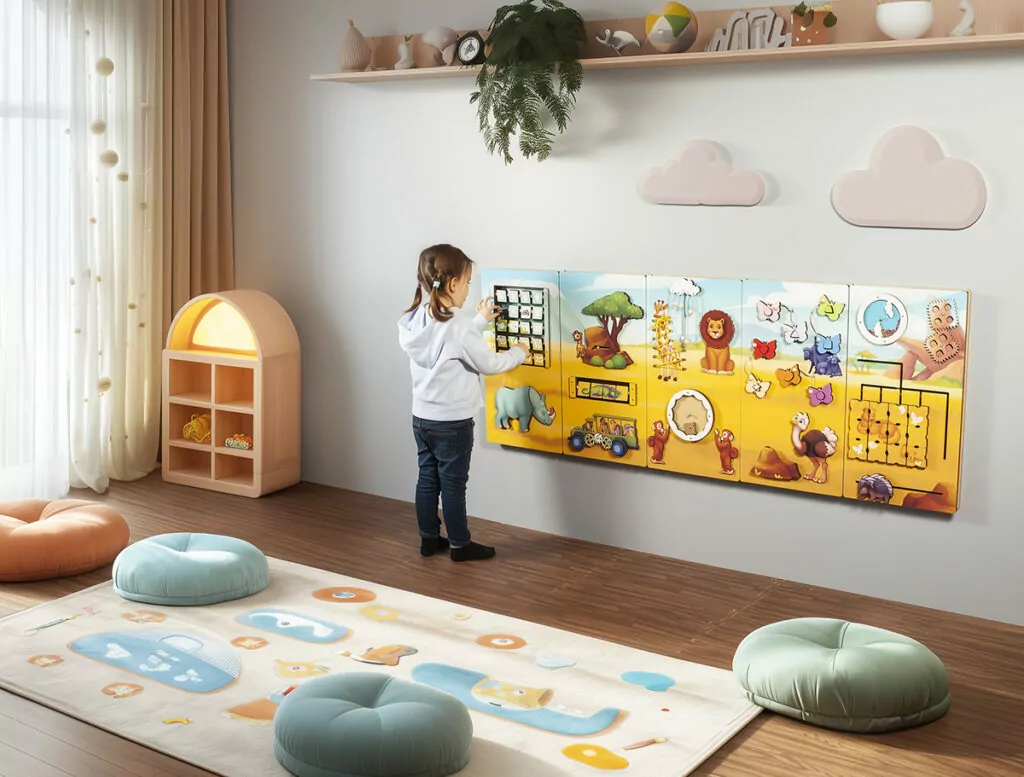
Pick a small area where your child feels safe: a corner of the bedroom, part of the living room or a nook under the stairs. It does not need to be large. Children like a clearly defined space that feels like their own.
Choose a spot away from loud noise and busy traffic through the house. A corner near a window works well if you can soften the light with curtains.
Soft Surfaces
A soft rug, a bean bag or a few cushions make the space welcoming. Many children like to arrange a blanket and pillows themselves.
Keep colours gentle. Natural shades and pastel tones usually work best, while many bold patterns can make the corner feel busy.
Lighting
Harsh overhead light makes it hard to settle. A small lamp, string lights or a dimmable bulb gives a softer glow. Some families add a night light that casts gentle patterns on the wall. Avoid flashing or fast-changing lights.
Adding a Sensory Wall Panel
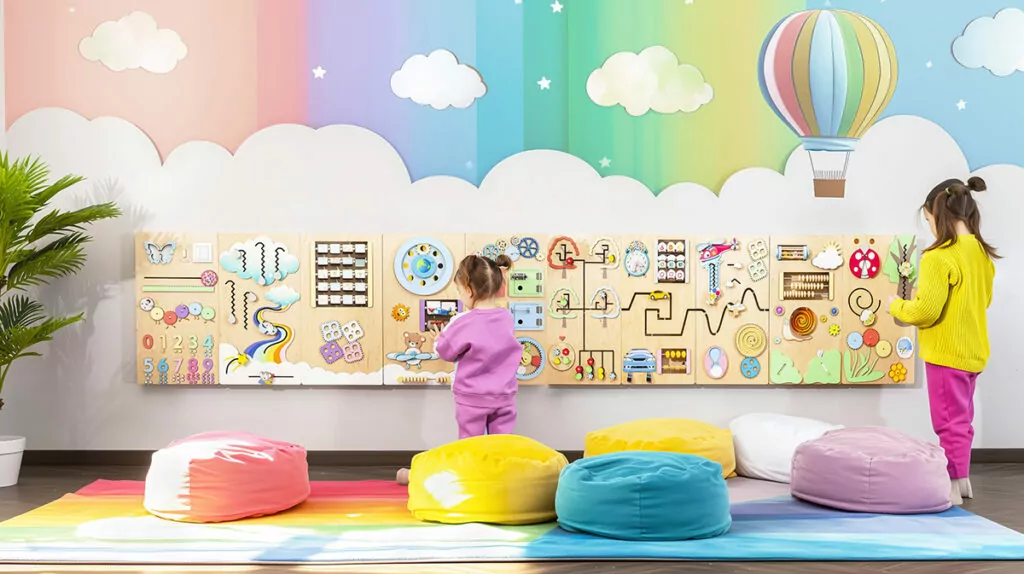
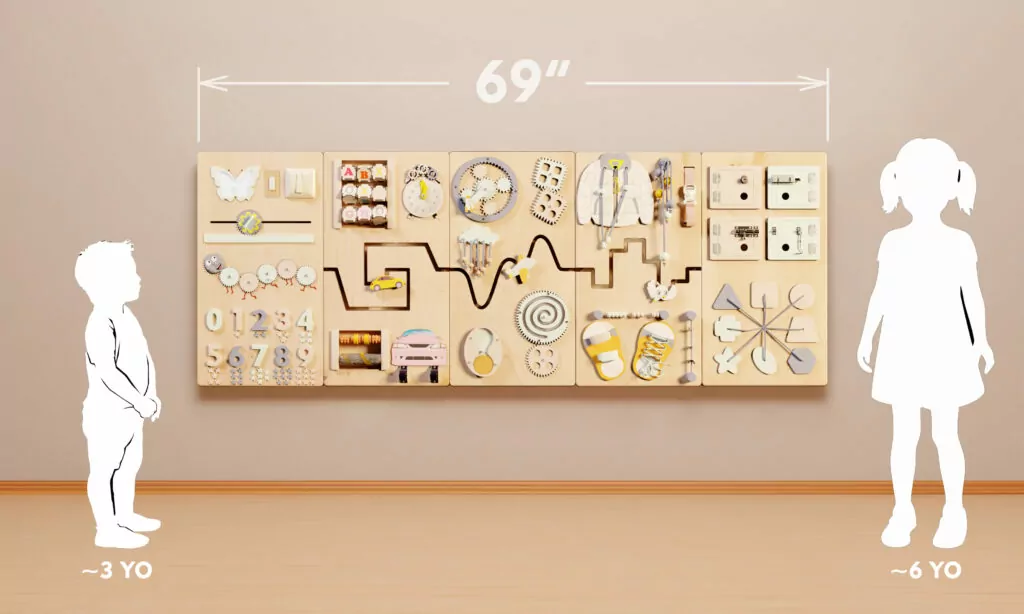
A sensory wall panel gives the corner something for busy hands. Each panel combines several activities, such as knobs to twist, gears to spin, latches to slide and textures to explore. Children can use it quietly and on their own, practising finger movements and small puzzles as they play.
A panel is also a good outlet for a child with extra energy. Instead of running around the room, they can turn, slide and open things at the wall.
Because it hangs on the wall, a panel takes no floor space, which helps in small rooms. For a home corner, families often choose our pastel sensory wall panel. If you want to pick the activities yourself, the DIY pastel panels can be combined panel by panel to fit your wall.
A Few Calm Extras
A small basket with squeezable toys, a few favourite books or picture cards adds variety. Some parents play soft music or nature sounds in the background.
Do not fill the corner with too many things. A few well-chosen items are enough, and children often return to the same familiar ones.
Helping Your Child Use the Corner
Treat the corner as a pleasant place, never as a punishment. Sit there together in calm moments, read a short story or explore the panel side by side.
Once your child sees it as their own space, they will start using it on their own. Encourage them gently without forcing it.
Keep It Simple and Let It Grow
The corner can change as your child grows. A toddler may enjoy soft textures and simple activities, while a preschooler may want more challenging ones. Rotate a few items from time to time to keep the space fresh.
Bringing It All Together
A sensory-friendly corner does not need a big budget. A soft rug, warm light and one or two hands-on activities are enough to turn a small corner into a quiet place your child can call their own.
Setting up a sensory wall in a classroom instead? Read our guide to sensory wall panels for daycares and preschools.